
Single Dental Implants in Cheshire
Replace a missing tooth with something that looks, feels, and functions exactly like the real thing. A single dental implant is a permanent solution that does not compromise the healthy teeth around it.
- 99.5% Implant Success Rate
- MSc Implant Dentistry, University of Manchester
- Clinics in Wilmslow and Northwich
- Free Consultation Available
- Service
A Missing Tooth Is More Than a Gap in Your Smile
Most people think of a missing tooth as a cosmetic problem. Something to be self-conscious about in photos, or when meeting someone new. And it is that. But it is also something more.
When a tooth is lost, the bone beneath it begins to resorb. Without the stimulation a tooth root provides, the jawbone in that area gradually reduces in volume over time. The teeth on either side can start to drift into the gap. The tooth above or below the space may begin to over-erupt. What starts as a single missing tooth can, over years, quietly affect the alignment, function, and structure of the surrounding area.
A dental implant is the only tooth replacement option that addresses both the visible and the underlying problem at once. The titanium implant acts as an artificial root, anchoring a crown on top and stimulating the jawbone in exactly the same way a natural tooth root would.
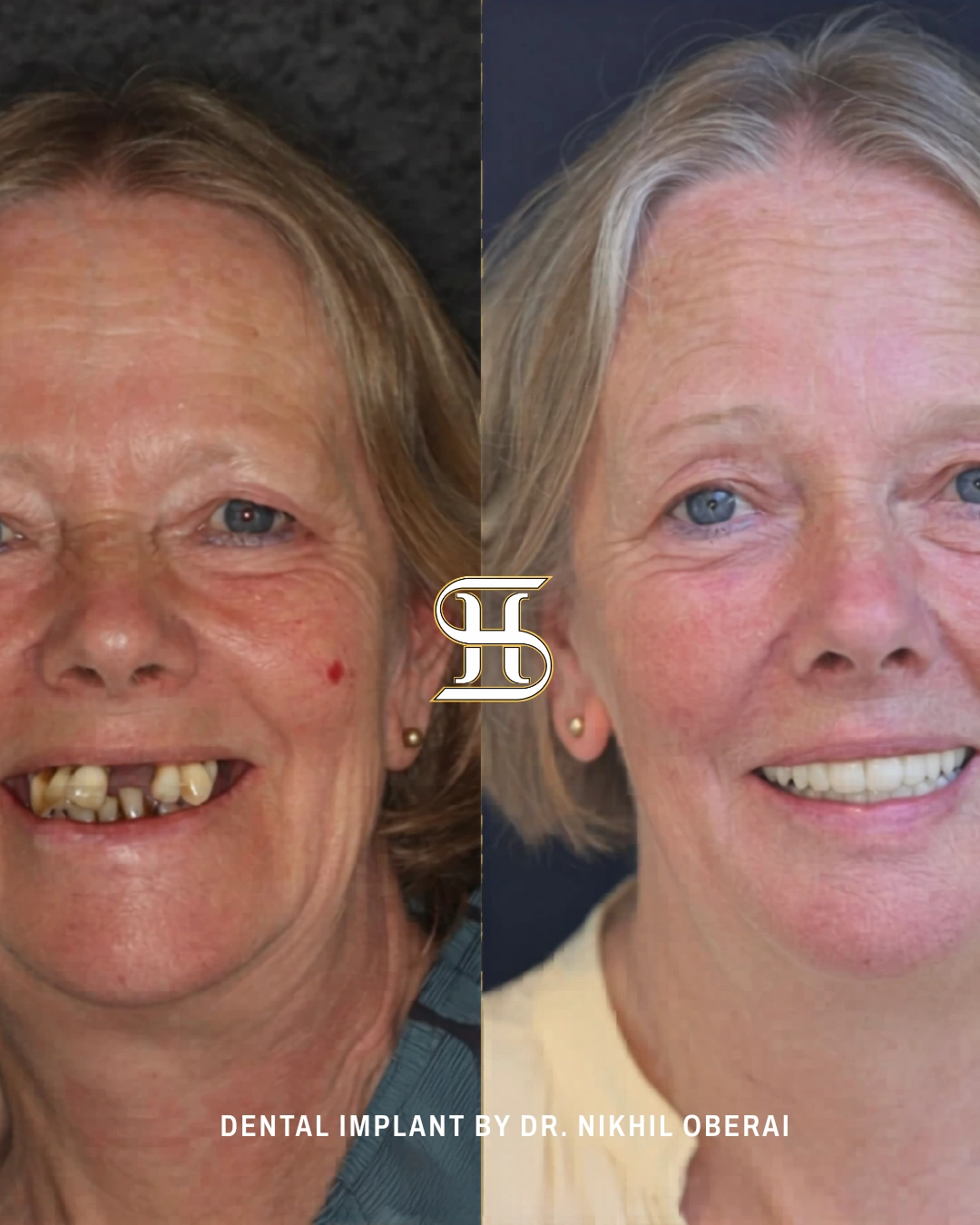
At Heritage Smile Group, single implants are placed personally by Dr Nikhil Oberai, whose MSc in Implant Dentistry from the University of Manchester and 99.5% success rate across hundreds of cases make him one of the most experienced implant clinicians in Cheshire.
What a Single Implant Involves
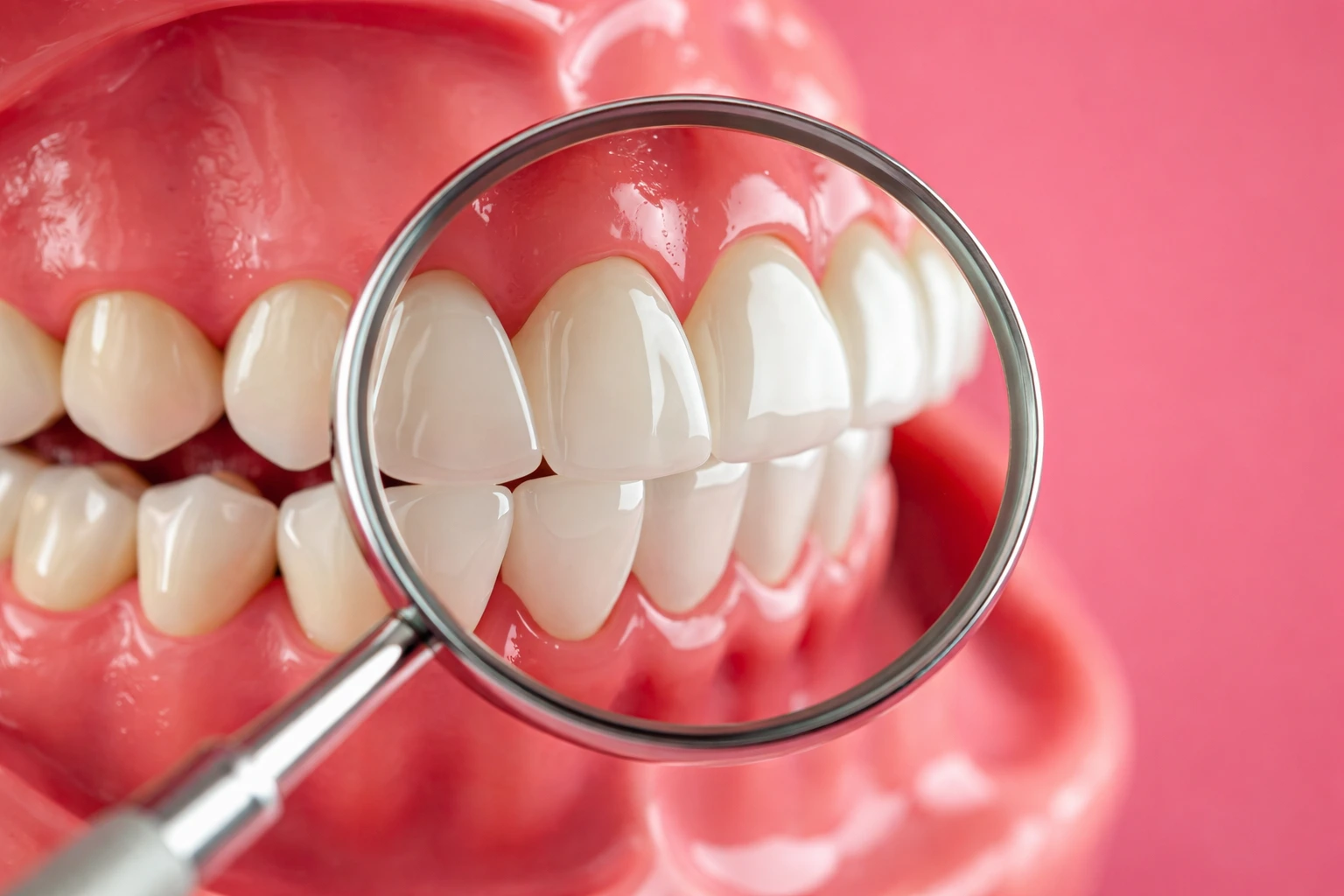
A single dental implant is a three-part restoration. Understanding each component helps clarify why implants deliver such a natural and long-lasting result.
The Implant
A small titanium post, typically between three and five millimetres in diameter, that is placed surgically into the jawbone. Titanium is biocompatible, meaning the body does not reject it. Over a period of around three to four months, the implant fuses with the surrounding bone through a process called osseointegration, creating a stable, permanent anchor.
The Abutment
A small connector piece that attaches to the top of the implant once integration is complete. The abutment holds the crown in position and transfers the forces of biting and chewing down through the implant into the bone, just as a natural root would.
The Crown
The visible part of the restoration. Custom-designed and crafted from high-quality ceramic, the crown is colour-matched to your surrounding teeth so that the finished result is virtually indistinguishable from the natural tooth it is replacing. Once fitted, most patients quickly forget which tooth was replaced.
Single Implants Compared to Bridges and Dentures
There are other ways to replace a single missing tooth. A bridge involves crowning the two healthy teeth on either side to support a false tooth between them. A partial denture is a removable appliance that sits in the gap. Both are valid options in the right circumstances, but neither addresses the underlying bone loss that occurs after a tooth is lost, and neither replicates the function of a natural tooth as closely as an implant.
Single Implant | Dental Bridge | Partial Denture | |
Permanent or removable | Permanent | Permanent | Removable |
Adjacent teeth affected | No | Yes, require crowning | No |
Bone preservation | Yes, stimulates bone | No | No |
Look and feel | Like a natural tooth | Natural but reliant on adjacent teeth | Less natural |
Cleaning | Brushed like a natural tooth | Requires flossing beneath bridge | Removed for cleaning |
Lifespan | Lifelong with proper care | 10 to 15 years typically | 5 to 10 years typically |
Upfront investment | Higher | Moderate | Lower |
The right option depends on your individual clinical situation, your priorities, and your budget. Dr Nik will give you an honest recommendation at your consultation and explain the advantages and limitations of each option clearly before you make any decision.
When a Single Implant Is the Right Answer
- A single missing tooth anywhere in the mouth
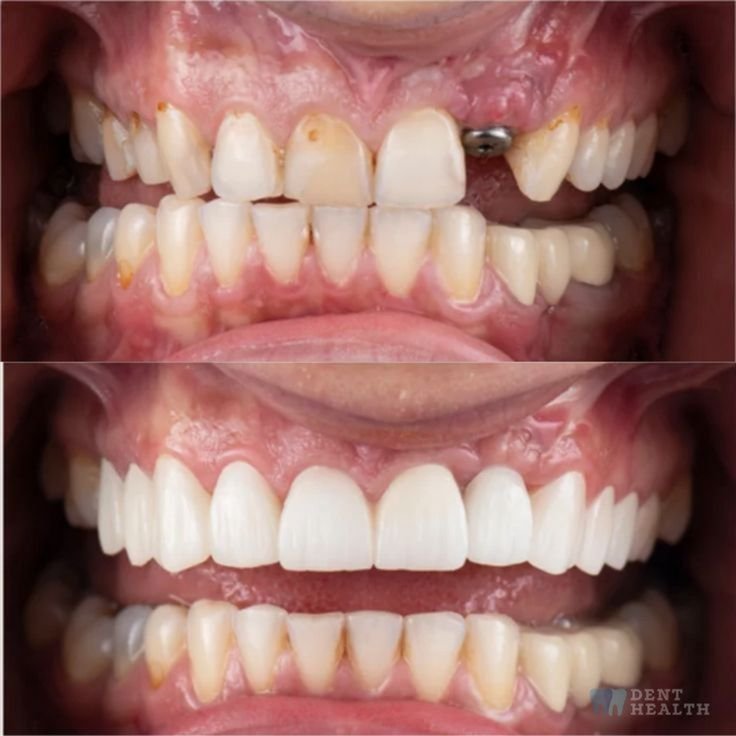
Whether you lost a tooth through decay, trauma, or extraction, a single implant can replace it with a result that integrates completely with your surrounding teeth. Front teeth, back teeth, and everything in between can be replaced with the same technique.
- A tooth that cannot be saved
If a tooth is too far decayed or damaged to restore with a crown or root canal treatment, extraction followed by implant placement is often the most sensible long-term course of action. Dr Nik will assess whether the tooth can be saved before recommending removal.
- A failed or poorly fitted bridge
If an existing bridge has failed or is causing problems, a single implant can replace the missing tooth without relying on the adjacent teeth for support again, giving those teeth the chance to be restored to their natural state.
- A gap left from a previous extraction
It is never too late to replace a missing tooth with an implant, though acting sooner is generally better because bone loss progresses over time. Dr Nik will assess the current state of the bone at your consultation and advise on the best approach.
- A loose or uncomfortable partial denture
For patients who are currently managing a gap with a partial denture that they find uncomfortable or inconvenient, a single implant offers the opportunity to replace it with something permanent that does not need to come out.
Not Sure Which Treatment Is Right for You?
Make an Enquiry
#SmileWall
- What to Expect
Your Single Implant Journey, Step by Step
Free Consultation
Dr Nik will carry out a thorough clinical assessment including x-rays and clinical photographs. He will assess the bone volume at the implant site, examine the health of your surrounding teeth and gums, and discuss your goals. If an implant is the right option for you, he will explain exactly what the process will involve and give you a clear treatment plan and cost before you leave.
Implant Placement
The implant is placed into the jawbone under local anaesthetic in a single surgical appointment. A temporary crown or cover may be placed on the implant while it heals. The procedure is typically far more comfortable than patients anticipate, and most people return to normal activity the following day.
Healing and Integration
Over the following three to four months, the implant integrates with the surrounding bone. This is a natural biological process and requires no specific action from you beyond following aftercare advice and attending your review appointments with Dr Nik.
Crown Fitting
Once integration is confirmed, your custom-made crown is designed, manufactured, and fitted. Dr Nik will check the fit, colour, and bite carefully before the crown is secured permanently in place. At this point, the restoration is complete.
Ongoing Care
Your implant is maintained in exactly the same way as your natural teeth. Brush twice daily, floss regularly, and attend your routine check-up and hygiene appointments. With proper care, the implant itself is designed to last a lifetime.
- Meet Your Clinician
Placed Personally by Dr Nikhil Oberai
Every single implant at Heritage Smile Group is placed personally by Dr Nikhil Oberai. His MSc in Implant Dentistry from the University of Manchester, combined with his 99.5% success rate across hundreds of cases and his ongoing role teaching implant dentistry at postgraduate level, mean that when you sit in his chair for a single implant procedure, you are in very experienced hands.
The standard of care and attention Dr Nik brings to a full arch case is the same standard he brings to a single tooth. Every implant matters because every patient matters.
- Patient Testimonial
What Our Patients Say About Their Implant Experience
I lost a tooth at the front of my mouth and was absolutely dreading seeing a dentist about it. Dr Nik put me completely at ease from the moment I walked in. The implant looks identical to my natural teeth and I genuinely cannot tell which one it is when I look in the mirror. I only wish I had done it sooner.”
- Patient, Wilmslow
- Dental Finance
Spreading the Cost of Full Arch Implants
We understand that full arch implant treatment represents a significant investment. We offer flexible finance options across all packages so that the cost can be spread over monthly payments that suit your budget.
At your free consultation, we will provide you with a clear, itemised treatment plan and walk you through all of the finance options available to you. There is no obligation to proceed and no pressure to decide on the day.
- Register with us
Register with Heritage Smile Group. 2 Locations Across Cheshire
We are actively welcoming new patients at both Heritage Smile Group practices in Cheshire. Whether you are new to the area and need to register with a dentist, looking for a higher standard of care than you have been receiving, or have a specific treatment in mind that your current practice does not offer, we would be genuinely glad to welcome you.
When you join us as a new patient, here is what you can expect:
- Full new patient examination including x-rays
- Written treatment plan with itemised costs
- No pressure to commit on the day
- Examination fee waived if you join our practice plan
- Free consultations for implants and Invisalign
Both practices welcome adults and children, new arrivals to the area, and patients who simply want a reliable local dentist they can trust.
- Frequently Asked Questions
Confused? Let us help
How long does a single implant take from start to finish?
The full process from implant placement to final crown typically takes three to five months. The majority of that time is the healing and integration period between the surgery and the crown fitting appointment. The actual clinical appointments involved are relatively few and are each straightforward.
Is the procedure painful?
Implant placement is carried out under local anaesthetic and should not be painful during the procedure. Afterwards, most patients experience some tenderness and mild swelling for a few days, which is normal and manageable. The experience is typically much less uncomfortable than patients anticipate beforehand.
How long will a single implant last?
The implant itself, once integrated with the jawbone, is designed to last a lifetime. The crown on top is highly durable but, like all dental restorations, may eventually need replacing after many years. How long your implant lasts depends on your oral hygiene, lifestyle, and whether you attend regular check-up appointments.
What if I don't have enough bone for an implant?
If bone loss at the implant site is a concern, Dr Nik will assess the volume and quality of available bone thoroughly during the planning stage. In some cases a bone graft may be recommended before or at the time of implant placement to build up the site. In others, the existing bone is sufficient for placement without any additional procedure. This can only be determined through proper clinical assessment.
At what age can I have a single implant?
Implants are generally recommended for patients whose jawbone has finished developing, which is typically from the late teens onwards for most patients. There is no upper age limit. Many of our patients having single implants are in their fifties, sixties, and beyond, and age alone is rarely a barrier to treatment.
Can a single implant be placed at the same time as a tooth extraction?
In some cases, yes. Immediate implant placement at the time of extraction is possible when the socket is healthy and the bone conditions are right. Dr Nik will assess whether this is appropriate for your individual situation during the planning stage.