
Implants for Denture Wearers in Cheshire
If you are tired of dentures that move, slip, or hold you back from living normally, dental implants offer a permanent, stable solution that changes everything. Fixed teeth that stay in place, all day, every day.
- 99.9% Implant Success Rate
- MSc Implant Dentistry, University of Manchester
- Clinics in Wilmslow and Northwich
- Free Consultation Available
Dentures Were Never Supposed to Be a Forever Solution
There is a particular kind of frustration that denture wearers know well. The awareness of them at the dinner table. The foods you gave up without making a conscious decision to. The slight hesitation before you laugh too hard or speak too quickly. The morning routine of putting them in and the evening routine of taking them out.
Most people who get dentures do so because it was the available option at the time. They are told the fit will improve. That they will get used to them. That in time they will feel natural.
For many patients that never quite happens, and they spend years managing a solution that solves one problem while quietly creating others.
Dental implants exist to change that entirely. Whether you want to stabilise the dentures you already have, or replace them with a set of permanently fixed teeth that never comes out, Heritage Smile Group offers both options. Dr Nikhil Oberai, who holds an MSc in Implant Dentistry from the University of Manchester and carries a 99.5% success rate across hundreds of cases, will assess your individual situation and recommend the approach that is genuinely right for you.
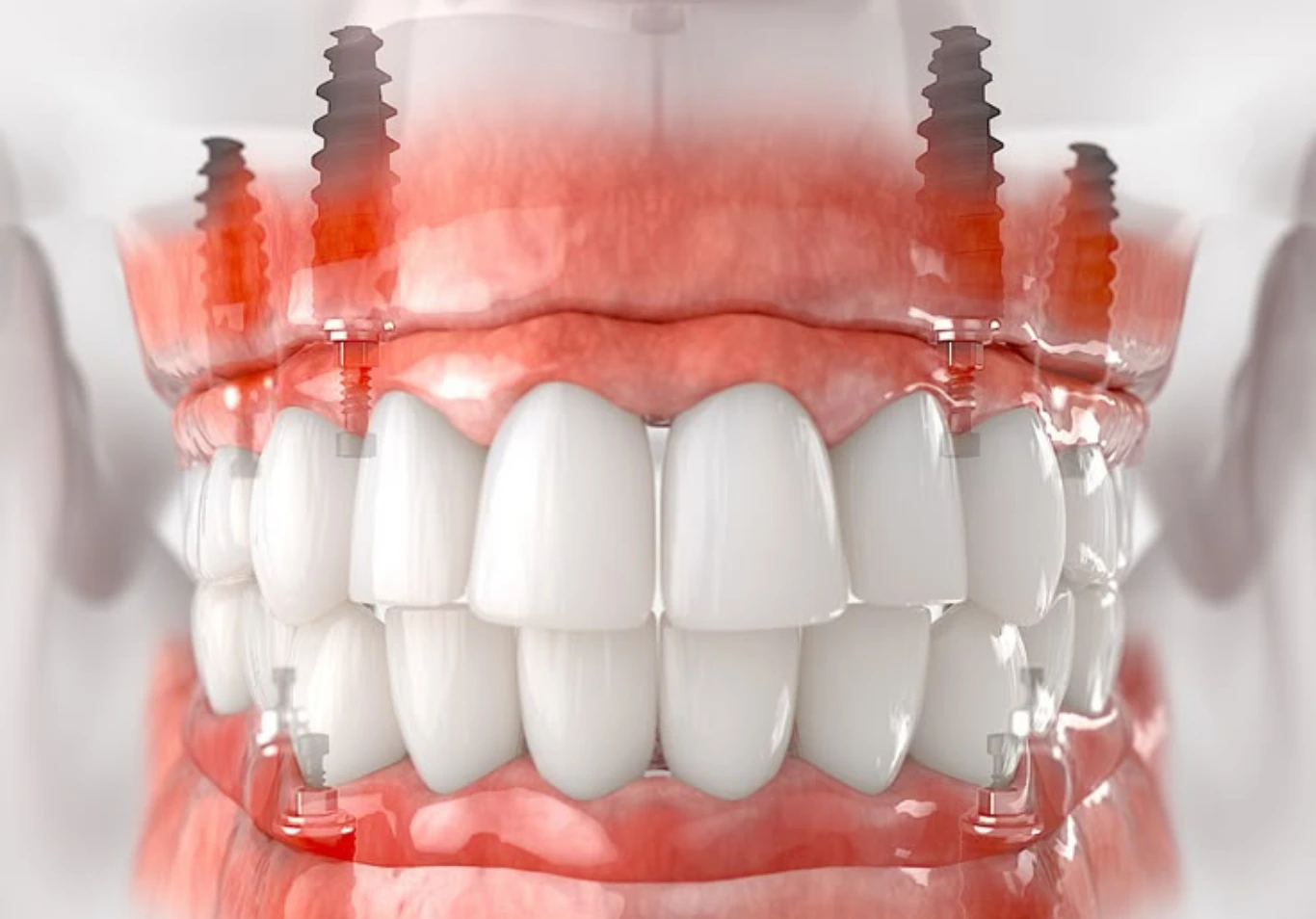
Two Ways Implants Can Help Denture Wearers
There is not one single implant solution for denture wearers. There are two distinct approaches, each suited to different situations and different goals. Understanding the difference helps you arrive at a consultation with a clearer sense of what you are looking for.
Option 1, Implant Stabilised Dentures
- What it involves: Two to four implants are placed into the jawbone. Your existing denture, or a new denture, is fitted with special attachments that clip or snap onto those implants. The denture still comes out for cleaning but is held firmly in place during the day, with no movement, no slipping, and no need for adhesive.
- Who it suits: Patients who want to significantly improve the stability and comfort of their denture without committing to the higher investment of a fully fixed solution. It is also a good option for patients where a fully fixed bridge may not yet be clinically appropriate.
- What changes: The denture no longer moves. Eating becomes more comfortable and more varied. The constant awareness of the denture in social situations is replaced by something much closer to confidence. You still remove it at night, but during the day it functions with a stability that an unfixed denture cannot match.
Option 2, Fixed Implant Teeth (Full Arch Implants)
- What it involves: Four to six implants are placed into the jawbone and a full fixed bridge of teeth is permanently secured on top. The teeth do not come out. They are brushed like natural teeth, eaten with like natural teeth, and simply become your teeth.
- Who it suits: Patients who want to move beyond dentures entirely and have a permanent fixed solution. This is the most comprehensive option and the one that most closely replicates the experience of having your own teeth back.
- What changes: Everything. Patients who make this transition consistently describe it as one of the most significant improvements to their quality of life they have ever experienced. The morning and evening routine changes completely. The foods come back. The self-consciousness disappears. It becomes, very quickly, something they cannot imagine having waited so long to do.
Implant Stabilised Dentures vs Fixed Implant Teeth
Implant Stabilised Dentures | Fixed Implant Teeth | |
Removable or fixed | Removable but clipped securely in place | Permanently fixed, does not come out |
Stability | Significantly improved over unfixed dentures | Complete, same as natural teeth |
Bone preservation | Partial, implants stimulate bone at implant sites | Full, all implant sites stimulated |
Cleaning | Removed for cleaning as normal | Brushed in place like natural teeth |
Number of implants | Typically 2 to 4 | Typically 4 to 6 |
Investment | More accessible upfront | Higher upfront investment |
Best suited to | Patients wanting better stability at lower cost | Patients wanting a permanent fixed solution |
Both are significant improvements on wearing an unfixed denture. Dr Nik will help you understand which option is appropriate for your clinical situation and your goals at your free consultation.
What Dentures Cannot Do That Implants Can
Beyond the everyday experience of wearing them, there is an important clinical difference between dentures and implants that affects your long-term oral health.
When a tooth is lost, the jawbone beneath it begins to resorb because it is no longer receiving stimulation from a root. Dentures sit on top of the gum and do not provide that stimulation. Over time, as the bone reduces, the shape of the jaw changes. Dentures that fitted well when they were made gradually become looser as the underlying bone continues to change.
This is why many denture wearers find that a denture that seemed acceptable in the first year becomes progressively less comfortable and less stable over time. The bone changes beneath it and the fit never quite keeps up.
Dental implants address this directly. The titanium implant acts as an artificial root, stimulating the bone exactly as a natural root would. Bone loss at the implant sites is halted. The jaw structure is maintained. For patients with full arch implants, this preservation happens across the entire arch.
For patients who have been wearing dentures for a number of years, the bone has already changed to some degree. Dr Nik will assess the current state of your bone thoroughly and give you an honest picture of what is possible before recommending a course of action.
Not Sure Which Treatment Is Right for You?
Make an Enquiry
#SmileWall
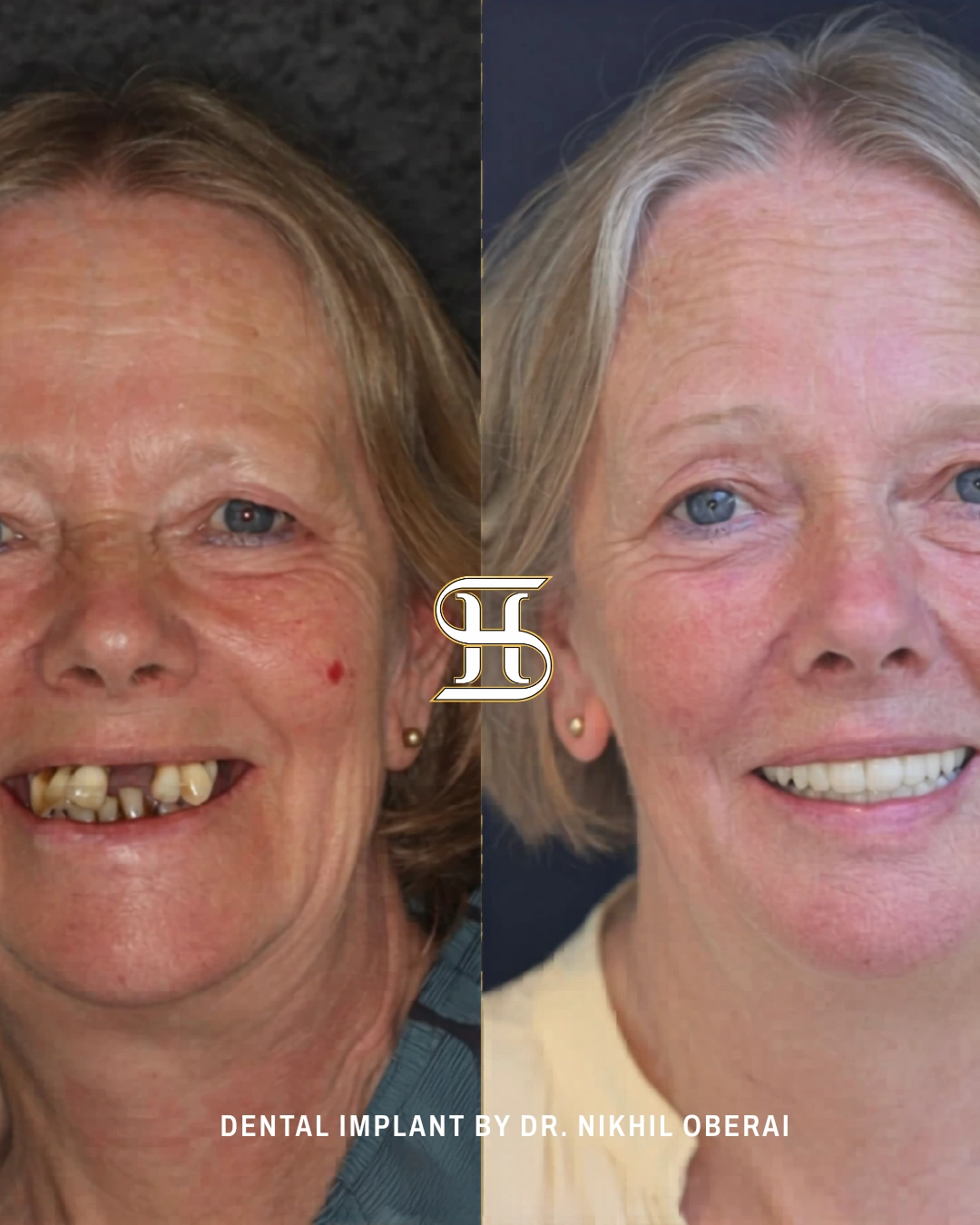
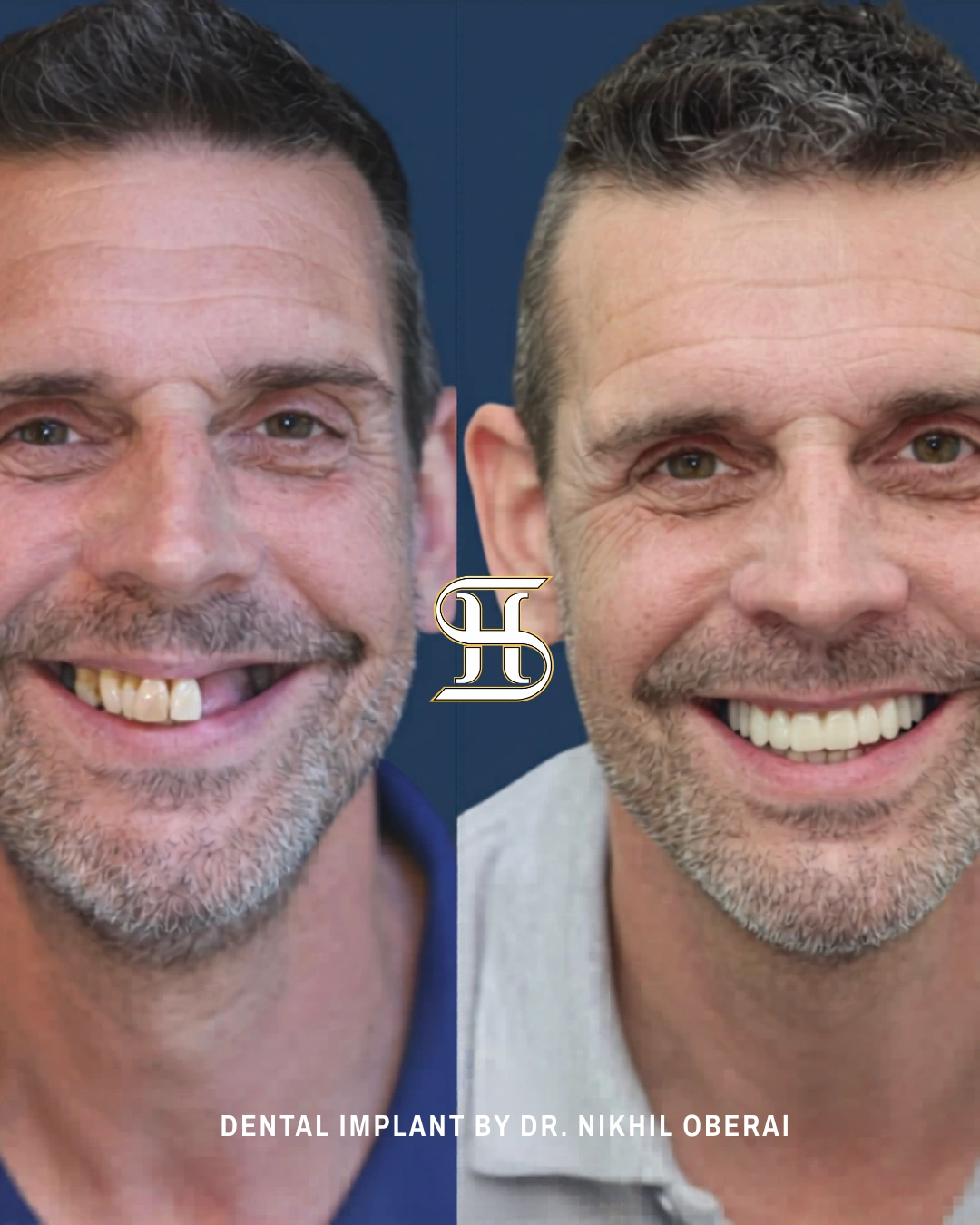
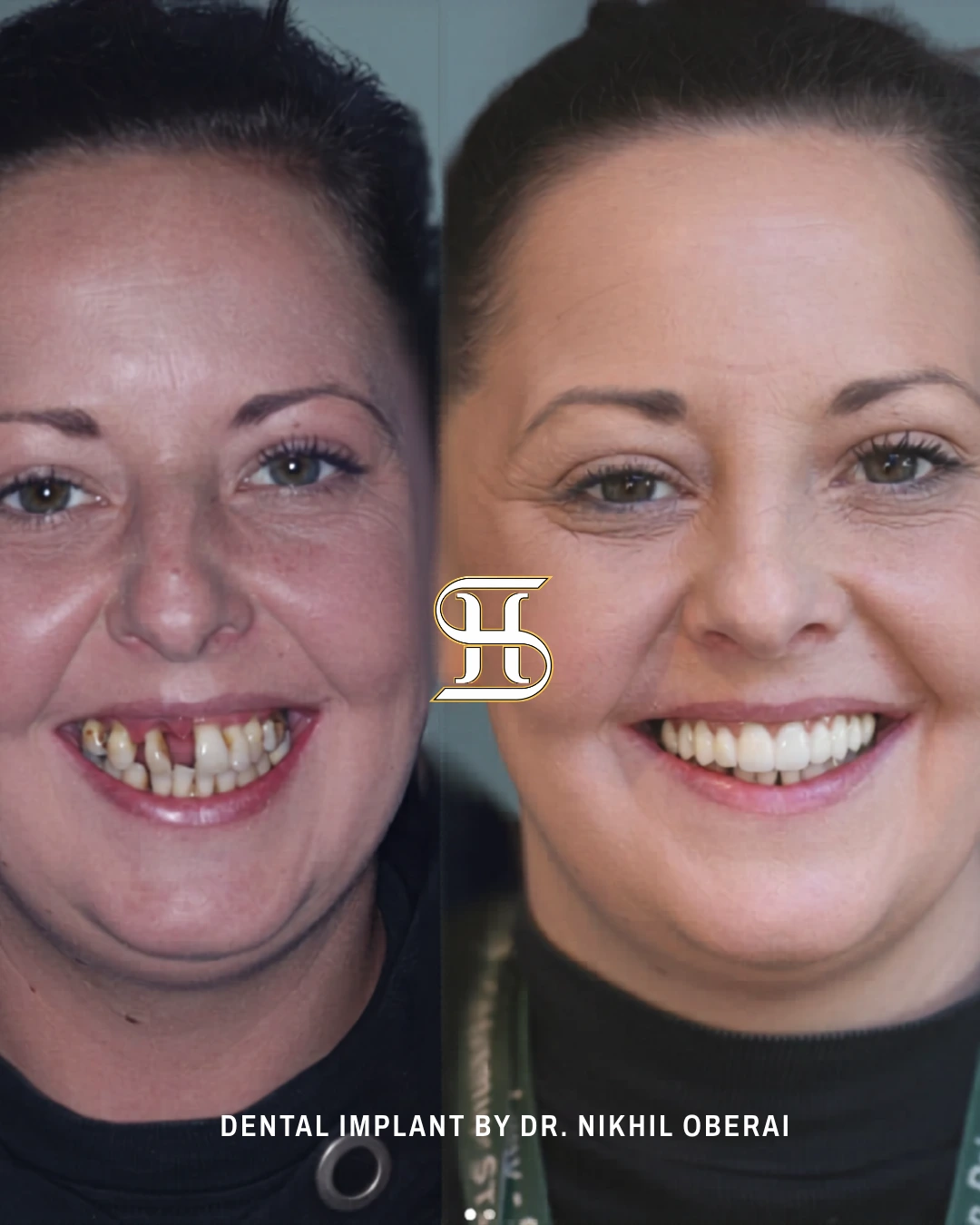
- What to Expect
Your Journey from Dentures to Implants, Step by Step
Free Consultation
Dr Nik will carry out a thorough clinical assessment including x-rays, a review of your current denture, and an examination of your gum and bone health. He will discuss both stabilisation and fixed implant options and give you a clear, honest recommendation. You will leave with a confirmed treatment plan and cost. There is no obligation to proceed.
Treatment Planning
Once you have decided to go ahead, detailed planning using clinical records and imaging ensures that implant placement is precise and the outcome predictable. For fixed implant treatment, 3D scanning and digital planning are used to prepare everything in advance.
Implant Placement
The implants are placed under local anaesthetic. Depending on the option you have chosen, between two and six implants are placed in a single appointment. A temporary restoration is put in place on the same day so you leave the practice with teeth. Most patients are pleasantly surprised by how manageable the procedure is.
Healing and Review
Over the following three to four months, the implants integrate with the jawbone. Dr Nik sees you for review appointments throughout this period. During this time, for patients having stabilised dentures, attachments are fitted to the existing denture so it can begin to be used with the implants.
Final Restoration
For stabilised dentures, the final attachments are confirmed and adjusted for comfort. For fixed implant treatment, the permanent prosthetic bridge is designed, manufactured, and fitted at this stage. This is the point at which the full result is visible and the transition from denture wearer is complete.
Ongoing Care
Your implants are maintained through good daily oral hygiene and regular check-up and hygiene appointments. Stabilised dentures continue to be removed for cleaning. Fixed implant teeth are brushed in place. Both are significantly more straightforward to live with than an unfixed denture.
- Meet Your Clinician
Assessed and Treated Personally by Dr Nikhil Oberai
All implant treatment for denture wearers at Heritage Smile Group is assessed and carried out personally by Dr Nikhil Oberai. His MSc in Implant Dentistry from the University of Manchester, his 99.5% success rate across cases treated at Heritage Smile Group and his extensive experience with both stabilisation and full arch cases mean that patients coming to him from years of managing with dentures are in knowledgeable, experienced hands.
He is also honest. If a full fixed solution is not yet clinically appropriate for your situation, he will tell you. If stabilisation is the better starting point, he will explain why. His recommendation will always be based on what is genuinely right for you.
- Patient Testimonial
From Denture Wearers to People Who Never Think About Their Teeth
- Helen Jeffery, Northwich
- Dental Finance
Spreading the Cost of Full Arch Implants
Whether you are considering implant stabilisation or a fully fixed solution, finance options are available through Tabeo Finance Ltd to spread the cost over manageable monthly payments. Finance is subject to status. Your confirmed costs and available finance options will be discussed at your free consultation with no obligation to proceed.
At your free consultation, we will provide you with a clear, itemised treatment plan and walk you through all of the finance options available to you. There is no obligation to proceed and no pressure to decide on the day.
- Register with us
Register with Heritage Smile Group. 2 Locations Across Cheshire
We are actively welcoming new patients at both Heritage Smile Group practices in Cheshire. Whether you are new to the area and need to register with a dentist, looking for a higher standard of care than you have been receiving, or have a specific treatment in mind that your current practice does not offer, we would be genuinely glad to welcome you.
When you join us as a new patient, here is what you can expect:
- Full new patient examination including x-rays
- Written treatment plan with itemised costs
- No pressure to commit on the day
- Examination fee waived if you join our practice plan
- Free consultations for implants and Invisalign
Both practices welcome adults and children, new arrivals to the area, and patients who simply want a reliable local dentist they can trust.
- Frequently Asked Questions
Questions Patients Ask About Implants for Denture Wearers
Can implants be used with my existing denture?
In some cases, yes. If your existing denture is in good condition and fits reasonably well, it may be possible to adapt it to work with implant attachments rather than making a new one. Dr Nik will assess your current denture at your consultation and advise whether it is suitable for modification or whether a new denture would give a better long-term result.
How many implants do I need to stabilise a denture?
Most lower denture stabilisation cases use two implants, which is often sufficient to provide a significant improvement in stability. Upper dentures typically require four implants because the upper jaw is anatomically different and the forces involved in chewing are distributed differently. Dr Nik will advise the appropriate number for your individual situation.
I have been wearing dentures for a long time. Is it too late for implants?
It is rarely too late, but the length of time you have been wearing dentures does affect the state of the underlying bone. Bone resorption is a gradual process that continues over time without the stimulation of tooth roots. Dr Nik will assess your bone volume at the consultation using x-rays and clinical examination, and give you an honest picture of what is possible. Some patients who have worn dentures for many years are still good implant candidates. Others may need bone grafting as part of the treatment plan.
Will I need to go without teeth at any point during treatment?
For most patients, no. A temporary restoration is placed at the time of implant surgery so you leave the practice with teeth in place. For patients having their denture adapted rather than replaced, the existing denture can usually continue to be worn during the healing period with some minor adjustments.
What is the difference between implant retained and implant supported dentures?
These terms are sometimes used interchangeably but refer to slightly different things. An implant retained denture is held in place by implants but the denture itself still rests partially on the gum, with the implants providing retention. An implant supported denture is fully supported by the implants with minimal or no contact with the gum tissue. In practice, the distinction matters less than understanding whether you are having a stabilised removable denture or a fully fixed bridge. Dr Nik will explain which option applies to your treatment plan clearly at your consultation.
Is the procedure painful?
Implant placement is carried out under local anaesthetic and should not be painful during surgery. Afterwards, most patients experience some tenderness and swelling for a few days, which is normal and manageable with over-the-counter pain relief. Patients who have worried about pain consistently report that the reality was much more manageable than they expected.