There is a particular moment that a lot of people in Cheshire will recognise. You are sitting across the table at a dinner in Alderley Edge, or catching up with friends after a walk along the Bollin in Wilmslow, and someone mentions their dental implants. Not in a showy way, just casually, the way you mention a new pair of glasses or a new car. And you think: I have been meaning to look into that.
Then you go home, you type something into Google, and twenty minutes later you are somehow more confused than when you started. One website tells you implants are suitable for almost everyone. Another lists seventeen contraindications that read like the small print on a medication leaflet. A forum thread from 2009 says someone’s cousin had one fail. You close the laptop and decide to think about it another day.
This post is for that person. Not a clinical textbook, not a sales pitch. Just a clear, honest guide to understanding whether dental implants are a realistic option for you, written from the perspective of a practice that places a lot of them across Cheshire and has seen pretty much every variation of the question you are currently asking yourself.
The short answer, by the way, is that the vast majority of adults who want implants are suitable for them. But the longer answer is worth reading, because understanding what the assessment actually involves helps you walk into a consultation knowing what questions to ask.
What makes someone a good implant candidate in the first place?
Let’s start with the fundamentals, because there is a lot of noise around this topic and most of it overcomplicates something that is actually fairly straightforward when you understand the underlying logic.
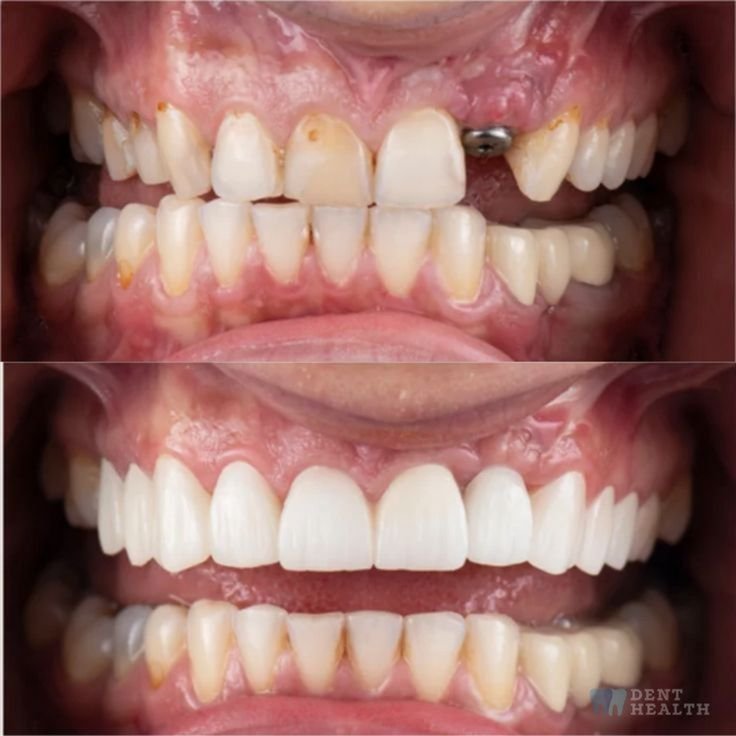
A dental implant is a titanium post that is placed surgically into the jawbone. Over a period of roughly three to four months, the titanium fuses with the surrounding bone through a biological process called osseointegration. Once that fusion is complete, a crown, bridge, or prosthetic arch is attached on top, and you have a tooth, or a set of teeth, that is fixed permanently in place.
For that process to work reliably, the following conditions need to be broadly true.
You need enough bone to place the implant into. The implant has to have something to anchor into. If bone volume is insufficient at the proposed site, either because of the natural anatomy or because of bone loss that has occurred since a tooth was removed, the implant may not be stable enough to integrate successfully. This does not automatically rule implants out. It just means additional steps, bone grafting or a sinus lift, may be needed beforehand. More on that below.
Your gum health needs to be reasonably stable. Active gum disease and implants are not a good combination. The same bacterial inflammation that affects natural teeth affects implants too, and placing an implant into a mouth with untreated gum disease significantly increases the risk of a condition called peri-implantitis, which is essentially gum disease around an implant. The good news is that gum disease can be treated, and most patients simply need a course of hygiene treatment to bring things to a stable baseline before implant placement.
Your general health needs to be considered. Most adults in reasonable general health are suitable for implants. A small number of medical conditions and medications affect bone healing and integration, and these need to be assessed individually. This is not a reason to assume you are not suitable. It is a reason to have a thorough consultation that includes a review of your medical history.
You need to be a non-smoker, or prepared to stop around the time of treatment. Smoking significantly increases the risk of implant failure. The chemicals in tobacco impair the blood supply to the healing tissues and interfere with the integration process. Many practices, including ours, will still treat smokers, but the failure rate is higher and that needs to be part of an honest conversation before treatment proceeds.
Your teeth and jaw need to have finished developing. Implants are generally not placed in patients whose jaw has not yet fully matured, which in most cases means patients under 18. There is no upper age limit. We place implants in patients in their seventies and eighties regularly at both our Wilmslow and Northwich practices, and age alone is almost never a barrier.
The bone question and why the answer is often better than you think
The single most common concern that patients bring to their first implant consultation is the bone question. They have been told, or they have read, or they suspect, that they might not have enough bone for implants to work. Sometimes they have been told this by another dentist, which understandably feels final.
It is worth understanding exactly why bone is lost and what can be done about it, because the picture is often more manageable than patients expect.
When a tooth is removed, the bone that surrounded the root of that tooth begins to resorb. It is a gradual process, but it is relentless, because bone responds to the mechanical forces placed on it. When those forces disappear, the bone slowly reduces in volume. The longer a gap has been left, the more bone has typically been lost.
This is one of the more compelling arguments for replacing missing teeth promptly, and it is also why people who have worn dentures for many years often have significantly reduced bone ridges compared to their jaw when they first had teeth removed.
The positive version of this story, which often surprises patients, is how much can be done to address bone loss when it is identified. Bone grafting, sinus grafting, and sinus lifting are all established procedures that rebuild bone volume at the implant site, making placement possible in many cases where it might otherwise not be. Zygomatic implants, which anchor into the cheekbone rather than the jaw, are an option for patients with very significant upper jaw bone loss where even grafting would not be sufficient.
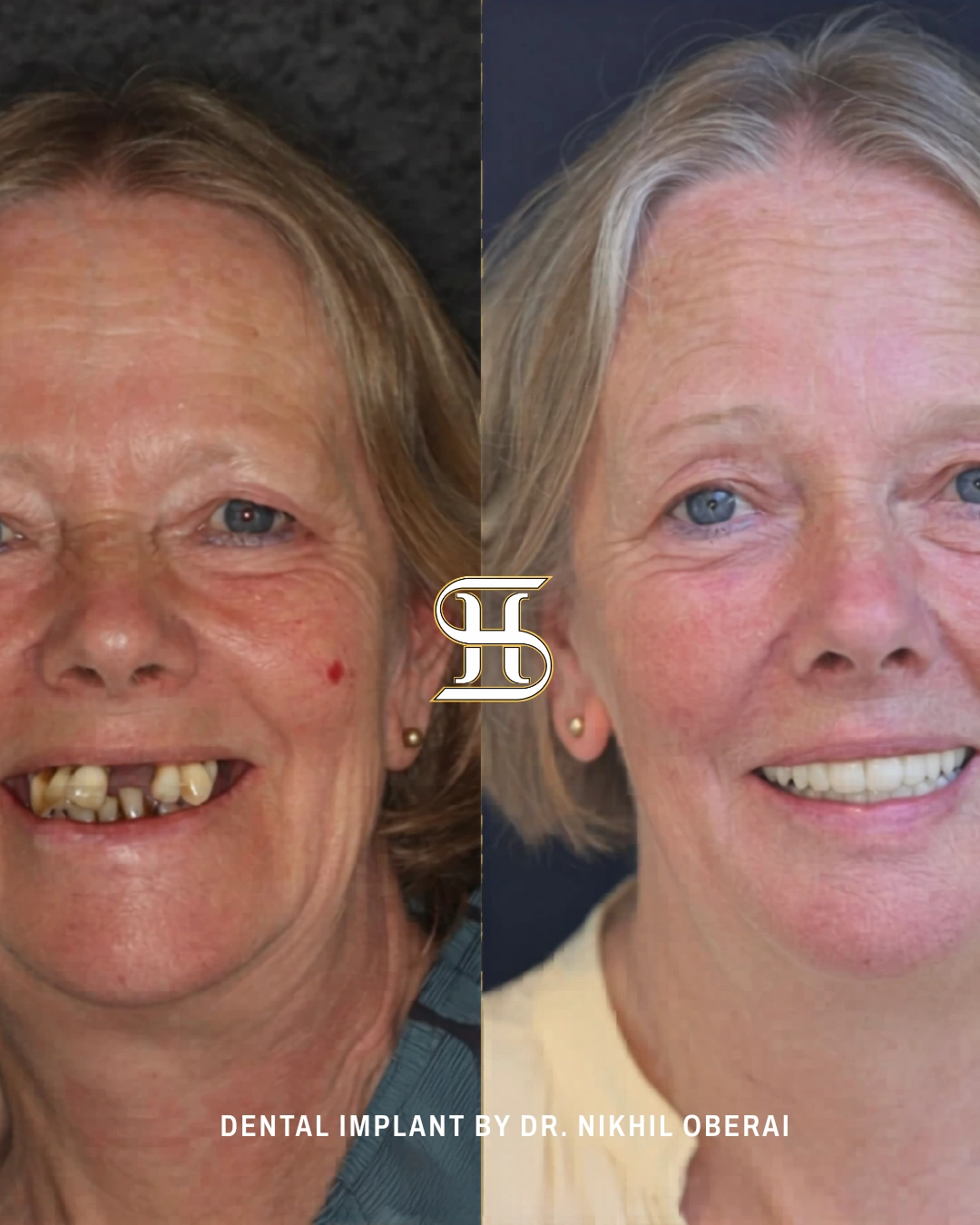
At Heritage Smile Group, Dr Nikhil Oberai holds an MSc in Implant Dentistry from the University of Manchester and has particular experience with complex cases involving bone deficiency. He is the clinician that other dental practices across Cheshire refer their most challenging cases to, which means patients who have been turned away elsewhere are not necessarily at the end of the road.
The assessment tools available today, particularly CBCT scanning, which produces a three-dimensional image of the jaw, make it possible to evaluate bone volume with a level of precision that was not available even a decade ago. A thorough assessment will always give a much clearer picture than general anxiety based on something a different dentist said in passing.
Conditions that need consideration (But rarely mean a flat no)
Let’s go through the medical conditions and circumstances that come up most often in implant consultations, because patients frequently arrive having read something alarming online and wondering whether their specific situation is a problem.
Diabetes
Uncontrolled diabetes does affect wound healing and can increase the risk of implant complications. Well-controlled diabetes, on the other hand, has a much more modest effect on implant outcomes and is not a contraindication in most cases. If you have diabetes and are considering implants, the key question is how well managed it currently is, which is a conversation to have with both your dentist and your GP.
Osteoporosis
Osteoporosis reduces bone density throughout the body, which raises questions about whether the jaw bone can provide reliable anchorage for an implant. The evidence on this is more nuanced than many people expect. Many patients with osteoporosis have successful implant treatment. The more significant concern relates to a specific class of medications used to treat osteoporosis called bisphosphonates, which can affect bone healing and require careful consideration before implant surgery. If you take medication for osteoporosis, this needs to be disclosed at your consultation and a full assessment carried out. It does not automatically mean implants are impossible.
Blood thinning medications
Patients taking anticoagulant medications such as warfarin or newer blood thinners require additional management around the surgical procedure. In most cases implant surgery can still be carried out, but it requires coordination with the prescribing doctor and careful planning around the medication. This is a logistical consideration more than a clinical barrier.
Cancer treatment
Radiotherapy to the head and neck affects the blood supply to the jaw bone and significantly increases the risk of a condition called osteoradionecrosis following implant surgery. Patients who have had radiotherapy to this area require very careful assessment and specialist input before implant placement is considered. It is not always impossible, but it requires a different level of planning and caution.
Heart conditions
Most heart conditions do not directly affect implant suitability. Patients who take antibiotic prophylaxis before dental procedures will need to follow the appropriate protocol. Patients who have had certain types of heart surgery should discuss this with their cardiologist before proceeding. For the vast majority of patients with a known heart condition, implants are entirely feasible.
A note on the online forums
If you have spent any time in dental implant forums, you will have encountered some deeply alarming anecdotes. The thing worth remembering about forums is that they disproportionately represent negative experiences. The patient who had a successful implant placed ten years ago and has never thought about it since is not posting about it. The patient who had a complication is. Both experiences are real, but the proportion they represent online bears no relationship to the proportion they represent in clinical practice.
What actually happens at an implant assessment
One of the reasons patients put off booking a consultation is that they are not sure what to expect from it, and not knowing what to expect makes it harder to take the step. So let us be very specific about what happens at a free implant consultation at Heritage Smile Group.
You sit down with Dr Nik and have a conversation. He will ask about the teeth you are missing, how long they have been gone, and what your goals are. He will ask about your general health, your medications, and whether you have any known issues with the jaw or bone. He will examine your mouth and gums.
He will take x-rays, and in many cases a CBCT scan, which is a three-dimensional image that shows the bone volume, the anatomy, and the position of any important structures like the inferior alveolar nerve in the lower jaw. This imaging is the most important part of the suitability assessment because it is specific to your jaw, not a generalised estimate.
Based on all of that information, he will tell you honestly what he finds. If implants are straightforward for your case, he will explain what the procedure involves, how many stages it requires, and what the timeline looks like. If additional steps like bone grafting are needed, he will explain those clearly. If there are genuine contraindications that make implants difficult or inadvisable, he will tell you that too, and he will explain what the alternatives are.
You will leave with a written treatment plan, a confirmed cost, and the information you need to make a decision. No pressure to commit on the day, and no charge for the consultation itself.
The whole process is a lot less daunting than the research rabbit hole, and significantly more useful.
The Checklist, signs you are likely a good candidate
Rather than leaving you with a list of conditions that might be problems, let us give you a more useful framing. Here are the characteristics that typically point towards straightforward implant candidacy.
You have one or more missing teeth that you want to replace permanently. You are a non-smoker, or you are prepared to stop smoking around the time of treatment. Your gum health is reasonable, or you are prepared to have hygiene treatment to bring it to a stable baseline. You are in generally good health with no significant conditions affecting bone healing or immune function. You are over 18 and your jaw has finished developing. You have realistic expectations about what implants involve: they are a surgical procedure with a healing period, not a same-day cosmetic treatment in most cases.
If most of those apply to you, the chances are very good that implants are a realistic and achievable option. The edge cases, the bone deficiency, the medical complexities, the previous failed implants, are all worth discussing at a consultation rather than ruling yourself out in advance based on what you have read online.
One thing worth knowing that most people do not find until the consultation
There is a piece of information that regularly surprises patients at their first implant consultation, and it is worth mentioning here so you are not caught off guard.
Most people who have been missing a tooth for more than a year or two arrive at their consultation having assumed, often for years, that the window for implants has either closed or is closing. They have left it too long. The bone is too far gone. They should have done it sooner.
Almost universally, this turns out not to be the case.
Bone loss after tooth removal is real and it does progress over time. But the human jaw is a remarkably adaptable structure, and in the majority of cases, even after many years of a missing tooth or extended denture wearing, sufficient bone remains for implant placement, either directly or following bone grafting. Patients who are certain they are not suitable often discover in the assessment that they absolutely are.
The only way to know for certain is to come in and find out. And since the consultation is free, there is genuinely nothing to lose by doing so.