
Porcelain Veneers in Cheshire
Custom-designed, precision-crafted, and made to look entirely your own. Porcelain veneers are one of the most transformative treatments in cosmetic dentistry, and in the right hands the results are genuinely remarkable.
- MSc Prosthodontics, University of Manchester
- MFDS RCS (Ed), Royal College of Surgeons
- Clinics in Wilmslow and Northwich
- Free Consultation Available
- Service
The Treatment That Changes How You Feel About Your Smile Every Single Day
There are cosmetic dental treatments that make a noticeable difference. And then there are porcelain veneers, which for the right patient in the right hands have a way of completely reframing how a person sees themselves.
Patients who have wanted to do something about their smile for years, who have learned to position themselves in photos, who edit out the ones where they are laughing too widely, who hold back in social situations in ways they have never quite been able to articulate to anyone, often describe getting veneers as one of the best decisions they have ever made. Not because the treatment is extraordinary in some abstract sense, but because the daily, lived experience of finally being happy with their smile turns out to matter more than they expected.
What makes the difference between a result that achieves that and one that simply looks expensive and obvious is almost entirely down to the clinician designing and placing them.
At Heritage Smile Group, porcelain veneers are placed by Dr Natasja Kashyap, who holds an MSc in Fixed and Removable Prosthodontics from the University of Manchester and a Diploma from the Royal College of Surgeons of Edinburgh. Prosthodontics is the dental discipline specifically concerned with the design, function, and longevity of restorations. It is precisely the qualification that separates a clinician who understands how to design a veneer that looks like a better version of your own tooth from one who simply makes teeth white and uniform.
What Porcelain Veneers Actually Are
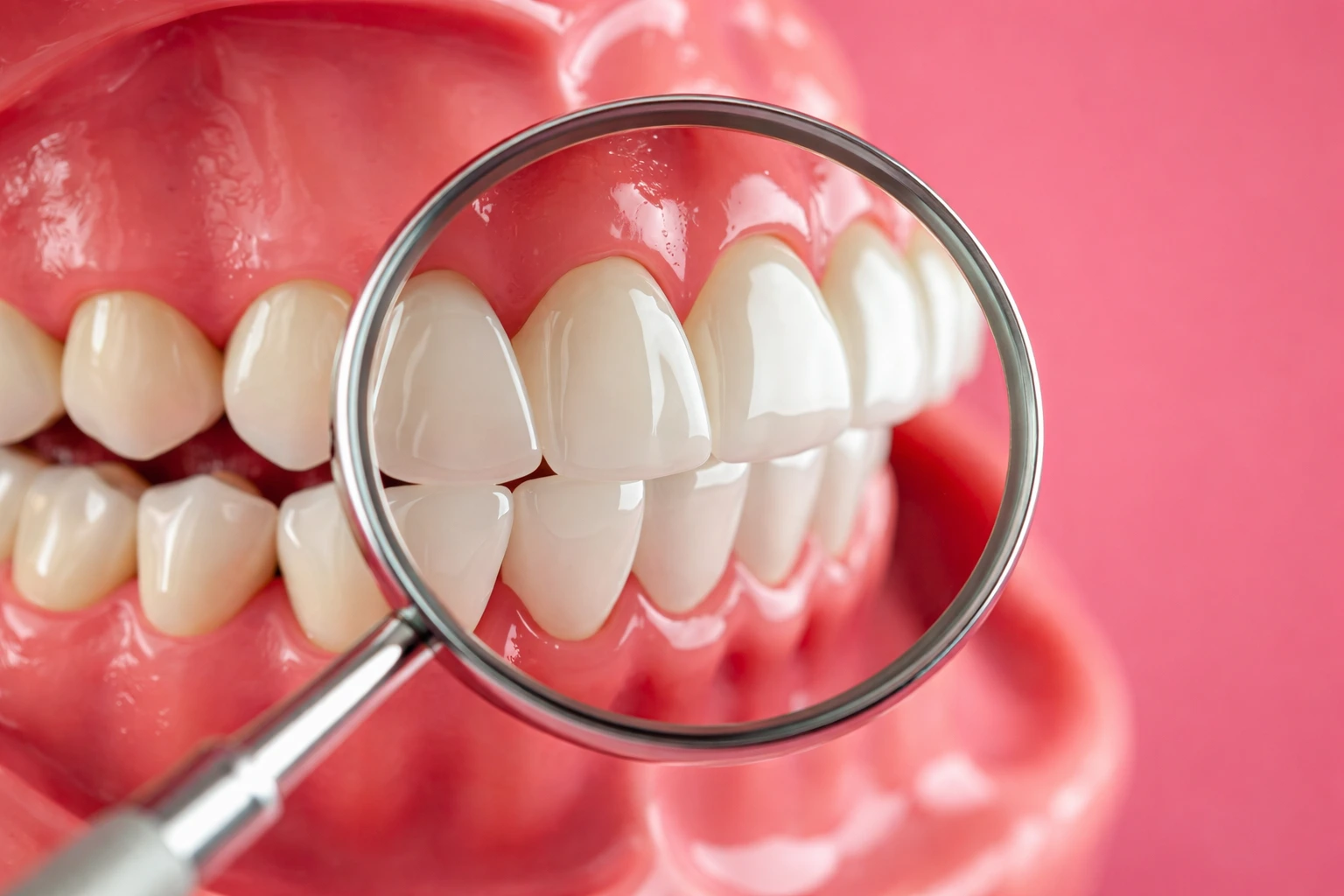
A porcelain veneer is a thin shell of dental ceramic, typically between 0.3 and 0.7 millimetres thick, that is bonded to the front surface of a tooth. It covers the visible portion of the tooth completely, allowing the clinician to redesign its colour, shape, length, and surface texture.
The process involves removing a small amount of enamel from the front of the tooth to create space for the veneer. This is usually minimal, particularly with modern ultra-thin veneer techniques, but it is a permanent alteration to the tooth structure. Once a tooth has been prepared for a veneer, it will always need to be protected by a veneer or crown. This is why the quality of the initial planning and patient selection matters so much. Veneers are the right choice for the right patient. They are not the right choice for everyone, and a clinician who tells you honestly when they are not appropriate for you is a clinician worth trusting.
The three elements of a veneer:
- Preparation A small amount of enamel is removed from the tooth surface to make room for the veneer and ensure it sits flush with the surrounding teeth. The amount removed depends on the type of veneer and the individual case. Minimal preparation techniques preserve as much natural tooth structure as possible.
- The Veneer Itself Porcelain veneers are fabricated in a dental laboratory by skilled ceramists working from detailed impressions or digital scans of your prepared teeth. The ceramic is layered and characterised to replicate the translucency and depth of natural tooth enamel. This is where much of the aesthetic quality of the final result is determined.
- Bonding The veneer is bonded to the tooth using a strong dental adhesive. Once bonded, it becomes a fixed, permanent part of the tooth. The bite is checked carefully and any adjustments are made before the appointment is complete.
The Concerns Porcelain Veneers Are Designed to Solve
Porcelain veneers are one of the most versatile cosmetic treatments available. They can address a wide range of aesthetic concerns either individually or in combination, and they are often the treatment of choice when multiple concerns need to be addressed at once with a single, co-ordinated result.
Discolouration that whitening cannot reach
Some types of tooth discolouration, including tetracycline staining, fluorosis, or intrinsic staining that originates within the tooth itself, do not respond to professional whitening. Veneers cover the tooth surface completely and can achieve any shade the patient wants regardless of the underlying colour.
Chips and cracks
Chipped or cracked teeth that affect the appearance of the smile can be restored with veneers to look completely intact. For patients with multiple chipped teeth, a set of veneers produces a co-ordinated result that individual restorations cannot match.
Worn teeth
Teeth that have worn down over time due to grinding or acid erosion can be restored to their original length and shape with veneers, improving both the appearance and the function of the smile.
Gaps between teeth
Spacing between teeth can be closed with veneers by slightly widening the adjacent teeth. For gaps that are too large for bonding to close naturally, veneers offer a reliable and aesthetic solution.
Irregular shape or size
Teeth that are unusually small, misshapen, or disproportionate to the rest of the smile can be redesigned completely with veneers. This is where the prosthodontics training that Dr Natasja holds is particularly relevant, as achieving the right proportions requires a detailed understanding of facial aesthetics and dental design.
Minor alignment issues
Where teeth are slightly rotated, tilted, or uneven, veneers can create the appearance of straighter teeth without orthodontic treatment. For more significant alignment issues, Dr Natasja will often recommend Invisalign first to move the teeth into the right position before veneers are placed.
Veneers or Composite Bonding: How to Know Which Is Right for You
Both porcelain veneers and composite bonding can produce beautiful cosmetic results, and patients often ask how to choose between them. The honest answer is that it depends on the individual case, and Dr Natasja will always recommend whichever option is most appropriate for your specific situation rather than defaulting to the more expensive one.
Porcelain Veneers | Composite Bonding | |
Material | Dental ceramic, laboratory fabricated | Tooth-coloured resin, applied chairside |
Durability | Highly durable, 10 to 15 years or more with good care | Good durability, typically 5 to 7 years before refinishing |
Stain resistance | Excellent, ceramic does not stain | Good but more susceptible to staining over time |
Preparation required | Small amount of enamel removal | Minimal to none in most cases |
Reversibility | Not reversible | More reversible in most cases |
Number of appointments | Typically two to three | Often completed in one appointment |
Cost | Higher | More accessible |
Best suited to | Significant colour change, multiple teeth, longer lasting result | Minor to moderate changes, single teeth, budget considerations |
For patients who want a comprehensive transformation across multiple teeth with the longest lasting result and the most precise colour control, porcelain veneers are typically the better option. For patients with more modest goals or who want to try a cosmetic improvement before committing to something permanent, composite bonding may be the right starting point.
Not Sure Which Treatment Is Right for You?
Make an Enquiry
#SmileWall
- What to Expect
Your Porcelain Veneer Journey at Heritage Smile Group
Free Consultation
Dr Natasja carries out a full clinical assessment including photographs and where relevant digital scanning. She discusses your goals, examines the health of your teeth and gums, and gives you her honest assessment of whether veneers are the right option for your case. If another treatment or a different sequence would serve you better, she will tell you. You leave with a clear picture of what is possible and what it involves. There is no obligation.Treatment Planning
Dr Natasja designs your veneer plan in detail, specifying the number of teeth, the shade, the shape, and the sequence of treatment. Where whitening or Invisalign is recommended as a foundation step, this is built into the plan. You receive everything in writing with a confirmed cost.
Foundation Treatments if Required
Where teeth whitening or Invisalign forms part of the plan, these are completed first. This ensures the veneers are designed around the right shade and the right tooth positions, producing a more cohesive and longer lasting result.
Preparation Appointment
The teeth are prepared by removing a small amount of enamel from the front surface. Impressions or digital scans are taken and sent to the laboratory. Temporary veneers are fitted to protect the prepared teeth and give you a preview of your new smile while the permanent veneers are being made. This stage typically takes two to three weeks.
Fit Appointment
Your permanent porcelain veneers are fitted, checked for colour, shape, and bite, and bonded permanently in place. Dr Natasja takes time at this appointment to ensure everything is exactly right before the veneers are confirmed. Any fine adjustments are made on the day.
Review and Ongoing Care
A review appointment is scheduled a few weeks after fitting to check everything is settling well. Dr Natasja advises on the best routine for maintaining your veneers long term, including which habits and products to avoid and when to schedule hygiene appointments.
- Meet Your Clinician
Designed and Placed by Dr Natasja Kashyap
All porcelain veneers at Heritage Smile Group are designed and placed personally by Dr Natasja Kashyap. From the initial shade consultation to the final bonding appointment, you are in the same hands throughout.
Her MSc in Fixed and Removable Prosthodontics from the University of Manchester is the specific qualification that underpins exceptional veneer work. It demands a detailed understanding of how restorations interact with the bite, the gum tissue, and the surrounding teeth, and how to design a result that looks entirely natural rather than simply cosmetically obvious.
Her patients consistently describe their veneers as looking like a better version of their own teeth, which is precisely what well-designed veneers should look like.
- Patient Testimonial
Patients Who Came to Us When Others Said It Could Not Be Done
“I was nervous about veneers looking fake or too white. I had seen results on other people that looked obviously cosmetic and that was the last thing I wanted. Dr Natasja listened very carefully to exactly what I was worried about and designed something that genuinely looks like my own teeth, just as they should have always looked. The difference in my confidence is something I notice every single day.”
- Patient, Macclesfield
- Dental Finance
Spreading the Cost of Your Veneers
Porcelain veneer costs depend on the number of teeth being treated. At your free consultation Dr Natasja will provide a fully itemised treatment plan with confirmed costs. Finance options are available to spread the investment over manageable monthly payments with no pressure to decide on the day.
- Register with us
Register with Heritage Smile Group. 2 Locations Across Cheshire
We are actively welcoming new patients at both Heritage Smile Group practices in Cheshire. Whether you are new to the area and need to register with a dentist, looking for a higher standard of care than you have been receiving, or have a specific treatment in mind that your current practice does not offer, we would be genuinely glad to welcome you.
When you join us as a new patient, here is what you can expect:
- Full new patient examination including x-rays
- Written treatment plan with itemised costs
- No pressure to commit on the day
- Examination fee waived if you join our practice plan
- Free consultations for implants and Invisalign
Both practices welcome adults and children, new arrivals to the area, and patients who simply want a reliable local dentist they can trust.
- Frequently Asked Questions
Questions Patients Ask About Porcelain Veneers
How long do porcelain veneers last?
Well-made porcelain veneers placed on properly prepared teeth by an experienced clinician can last ten to fifteen years or more with good care. Longevity depends on oral hygiene, diet, whether the patient grinds their teeth, and the quality of the original preparation and bonding. Dr Natasja will advise on the best maintenance routine to protect your veneers long term.
Are veneers painful?
The preparation appointment is carried out under local anaesthetic so the procedure itself should not be uncomfortable. Some patients experience sensitivity on the prepared teeth between the preparation and fit appointments, while the temporary veneers are in place. This is normal and resolves once the permanent veneers are fitted and bonded.
Can veneers be whitened?
No. Porcelain does not respond to whitening treatments. This is why the shade of your veneers needs to be decided carefully at the planning stage. Dr Natasja will discuss the right shade for your skin tone and facial features and will often recommend whitening the natural teeth to the desired shade before the veneers are designed so that everything matches cohesively.
How many veneers do I need?
The number depends on your individual goals and which teeth are visible when you smile. Most patients veneer the upper front six to ten teeth, as these are the most visible. Dr Natasja will recommend the right number based on your smile line and the result you want to achieve.
Can I get veneers on the NHS?
Porcelain veneers for cosmetic purposes are not available on the NHS. They are a private treatment. At Heritage Smile Group, finance options are available to spread the cost over monthly payments.
What happens if a veneer chips or comes off?
Although porcelain veneers are strong, they can chip or debond in rare circumstances. If this happens, contact the practice as soon as possible. In most cases a chipped veneer can be repaired or replaced relatively straightforwardly. A completely debonded veneer should be kept carefully and brought to the practice at the earliest opportunity, as it may be possible to recement it.