
Composite Bonding in Cheshire
Fix chips, gaps, and uneven teeth with a treatment that is often completed in a single visit. Composite bonding delivers genuinely beautiful results in the right hands, with minimal preparation and no permanent alteration to your tooth structure.
- MSc Prosthodontics, University of Manchester
- MFDS RCSEd, Royal College of Surgeons of Edinburgh
- Clinics in Wilmslow and Northwich
- Free Consultation Available
One of the Most Underrated Treatments in Cosmetic Dentistry
Composite bonding does not get the attention that veneers and implants do. It is not as dramatic a procedure, it does not involve a laboratory, and it is often completed in a single appointment. In the world of cosmetic dentistry, where more expensive and more complex treatments tend to attract the most interest, bonding quietly sits to one side.
Which is a shame, because in the right hands and for the right patient, composite bonding is capable of producing results that genuinely surprise people. Not just subtle improvements, but real, visible transformations that patients consistently describe as better than they expected.
The key phrase is in the right hands. Composite bonding is a skill-dependent treatment to a degree that many patients do not appreciate until they have seen the difference between work done well and work done to an average standard. The resin is applied freehand, shaped and sculpted directly on the tooth, and set with a curing light. There is no laboratory involved and no template to follow. The result depends almost entirely on the eye, technique, and experience of the clinician carrying it out.
At Heritage Smile Group, composite bonding is carried out by Dr Natasja Kashyap, who holds an MSc in Fixed and Removable Prosthodontics from the University of Manchester and a Diploma from the Royal College of Surgeons of Edinburgh. She approaches every bonding case with the same careful eye for proportion, shape, and natural appearance that she brings to all of her cosmetic work, and her results reflect that consistently.
What Composite Bonding Involves
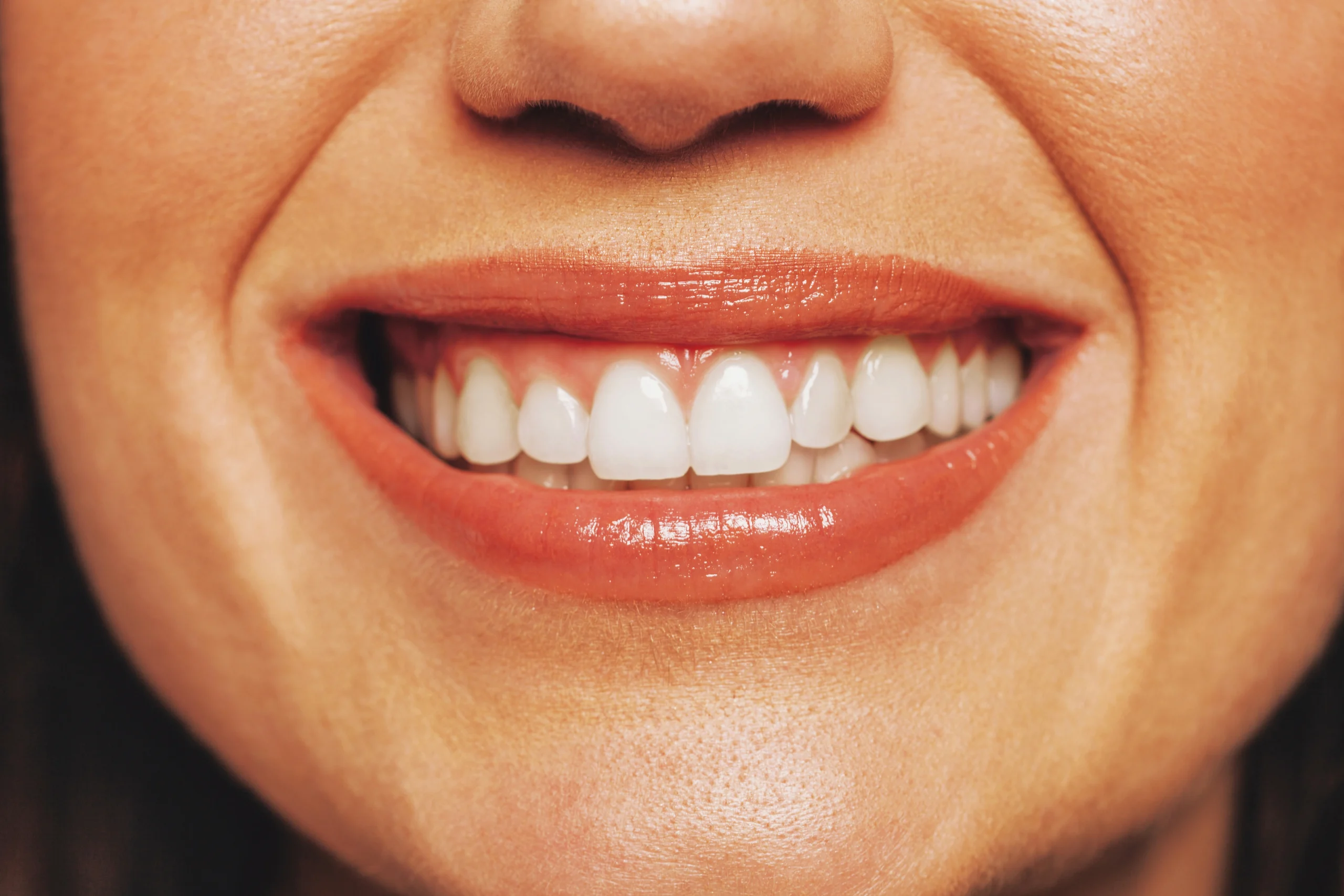
Composite bonding uses a tooth-coloured resin material that is applied directly to the surface of the tooth, sculpted into the desired shape, and hardened using a blue curing light. The process is carried out chairside, usually without any need for local anaesthetic, and in most cases the tooth requires little or no preparation beforehand.
The resin is available in a wide range of shades and is matched carefully to the surrounding teeth so the finished result integrates naturally. Once hardened it is polished to a smooth, natural finish that mimics the light-reflecting properties of natural tooth enamel.
The procedure is completely reversible in most cases because no tooth structure is removed. This makes it a very accessible starting point for patients who want to make a cosmetic improvement before committing to something more permanent like porcelain veneers.
The key stages:
- Preparation
In most cases, little or no preparation is required. The tooth surface is cleaned and a mild bonding agent is applied to help the resin adhere. If existing bonding or a minor imperfection needs to be removed first, this is done at this stage.
- Application and Sculpting
The composite resin is applied to the tooth in layers and sculpted by hand to achieve the desired shape, size, and contour. This is the stage that most depends on the skill and aesthetic judgement of the clinician.
- Curing and Polishing
Each layer of resin is hardened using a curing light. Once the final shape is achieved, the surface is polished to a natural finish. The bite is checked and any final adjustments are made before the appointment is complete.
The Concerns Composite Bonding Is Designed to Solve
Composite bonding is one of the most versatile treatments in cosmetic dentistry. It can address a surprisingly wide range of concerns, often with results that go well beyond what patients initially expected from a single appointment treatment.
Chipped or broken teeth
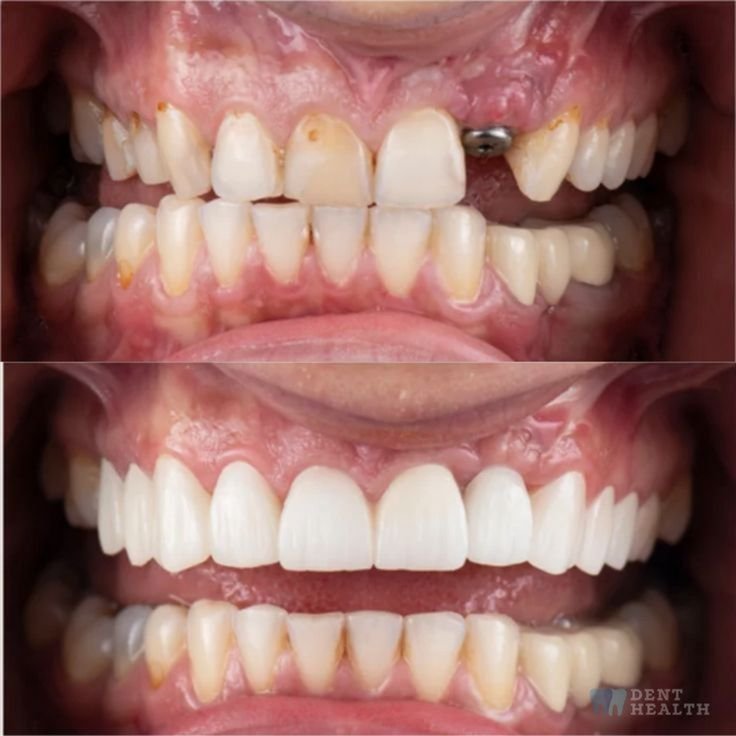
A chipped tooth is one of the most common reasons patients come to us for composite bonding. The chip is repaired by building the missing portion back up with resin matched to the original tooth colour. In most cases the result is completely invisible.
Gaps between teeth
Spacing between two or more teeth can be closed by slightly widening the adjacent teeth with bonding resin. The amount of closure possible depends on the size of the gap and the proportions of the surrounding teeth, which Dr Natasja will assess carefully to ensure the result looks natural.
Uneven or irregular tooth shape
Teeth that are slightly irregular in shape or that appear too short, too narrow, or mismatched alongside each other can be reshaped and evened out with bonding. A small amount of resin applied consistently across multiple teeth produces a co-ordinated result.
Minor discolouration on individual teeth
Where a single tooth or a small number of teeth have a different shade to the rest, bonding resin can be applied to cover the affected surface and match the surrounding colour more closely.
Worn teeth
Teeth that have worn down over time, particularly the front teeth, can be restored to a better length and shape with bonding resin. For patients with more significant wear, Dr Natasja will assess whether bonding alone is sufficient or whether a more comprehensive solution is needed.
Minor alignment irregularities
Where teeth are very slightly out of position, bonding can create the appearance of improved alignment without any orthodontic treatment. For patients with more significant alignment issues, Dr Natasja will often recommend Invisalign first to move the teeth into the right position before any cosmetic treatment is applied.
Is Composite Bonding right for you?
- Your underlying teeth are healthy
Composite bonding is a cosmetic treatment, not a restorative one. It works best on teeth that are structurally sound. Where underlying decay, gum disease, or other health issues are present, these need to be addressed before any cosmetic treatment is carried out.
- The changes needed are moderate rather than extensive
Composite bonding is excellent for addressing specific concerns on individual teeth or making co-ordinated improvements across a set of front teeth. For patients who want to make a very significant change to shade across multiple teeth, or who need a result that needs to last as long as possible, porcelain veneers may be the better option.
- You want to trial a cosmetic improvement before committing to something permanent
Because composite bonding is largely reversible and involves minimal tooth preparation, it is an ideal option for patients who want to experience a cosmetic improvement before deciding whether to progress to something more comprehensive. Some patients have bonding done and are happy with the result indefinitely. Others use it as a confident first step towards a more comprehensive makeover.
How to Decide Between Composite Bonding and Porcelain Veneers
Both treatments can produce excellent results. The question of which is right for you depends on what you want to change, how permanent you want the solution to be, and your budget. Dr Natasja will always recommend whichever option is genuinely most appropriate for your individual situation.
Composite Bonding | Porcelain Veneers | |
Material | Tooth-coloured resin applied chairside | Dental ceramic made in a laboratory |
Number of appointments | Usually one | Typically two to three |
Preparation required | Minimal to none | Small amount of enamel removal |
Reversibility | Largely reversible | Not reversible |
Durability | Typically 5 to 7 years before refinishing | 10 to 15 years or more |
Stain resistance | Good but can stain over time | Excellent, ceramic resists staining |
Colour range | Good | Greater precision and range |
Cost | More accessible | Higher investment |
Best suited to | Minor to moderate changes, flexibility, budget | Comprehensive transformation, lasting result |
For many patients the right answer involves both at different stages. Composite bonding now to make an improvement while deciding on longer term goals, followed by veneers later if a more comprehensive result is wanted. Dr Natasja will advise on the most sensible sequence for your individual situation.
Not Sure Which Treatment Is Right for You?
Make an Enquiry
#SmileWall
- What to Expect
Your Composite Bonding Journey at Heritage Smile Group
Consultation
Our team will carry out a thorough assessment of your teeth, including clinical photographs and an examination of your gum health, bite, and tooth structure. We will discuss what you want to change and give you an honest assessment of what composite bonding can achieve in your specific case. If another treatment would serve you better, we will tell you. There is no obligation to proceed.
Treatment Planning
Where bonding is to be carried out across multiple teeth, Dr Natasja will plan the treatment in detail beforehand, including the shade selection and the shape changes for each tooth. Good planning at this stage is what produces a cohesive, natural result rather than a piecemeal one.
The Bonding Appointment
In most cases bonding is completed in a single appointment. The tooth surface is prepared minimally, the resin is applied, sculpted, cured, and polished. Dr Natasja works methodically across each tooth, checking the proportions and appearance as she goes. Most patients are seated for one to two hours depending on the number of teeth being treated.Review
A review appointment is scheduled a few weeks after treatment to check that the bonding is bedding in well, that the bite is comfortable, and that you are happy with the result. Fine adjustments can be made at this stage.
Ongoing Care and Maintenance
Composite bonding requires the same basic care as natural teeth. Brushing twice daily with a non-abrasive toothpaste, flossing regularly, and attending hygiene appointments will all help maintain the appearance and longevity of the bonding. Some habits, including biting nails, chewing pen lids, or opening packaging with your teeth, can chip bonding and are worth avoiding.
- Meet Your Clinician
Carried Out Personally by Dr Natasja Kashyap
All composite bonding at Heritage Smile Group is carried out personally by Dr Natasja Kashyap. Her MSc in Fixed and Removable Prosthodontics from the University of Manchester gives her a detailed understanding of how restorations should look, function, and integrate with the bite and surrounding teeth. Her approach to bonding is meticulous and her eye for natural proportion and shape is what sets her results apart from the average.
She treats every bonding case with the same level of care regardless of how modest or how comprehensive the treatment is, because she understands that even a single chipped tooth, repaired beautifully, can make a meaningful difference to how a patient feels about their smile.
- Patient Testimonial
What Patients Say About Their Composite Bonding
“I had a chipped front tooth that I had been self-conscious about for years. I always assumed fixing it would be complicated or expensive. Dr Natasja sorted it in one appointment and I genuinely cannot tell if it was ever chipped. I wish I had done it years ago.”
- Patient, Wilmslow
- Dental Finance
Composite Bonding Is One of the Most Accessible Cosmetic Treatments We Offer
Because composite bonding involves no laboratory work and is often completed in a single appointment, it is significantly more accessible in cost terms than many other cosmetic treatments. Your exact cost will be confirmed at your free consultation based on the number of teeth being treated. Finance options are available through Tabeo if you would prefer to spread the cost. Subject to status.
- Register with us
Register with Heritage Smile Group. 2 Locations Across Cheshire
We are actively welcoming new patients at both Heritage Smile Group practices in Cheshire. Whether you are new to the area and need to register with a dentist, looking for a higher standard of care than you have been receiving, or have a specific treatment in mind that your current practice does not offer, we would be genuinely glad to welcome you.
When you join us as a new patient, here is what you can expect:
- Full new patient examination including x-rays
- Written treatment plan with itemised costs
- No pressure to commit on the day
- Examination fee waived if you join our practice plan
- Free consultations for implants and Invisalign
Both practices welcome adults and children, new arrivals to the area, and patients who simply want a reliable local dentist they can trust.
- Frequently Asked Questions
Questions Patients Ask About Composite Bonding
Is composite bonding painful?
In the vast majority of cases, composite bonding does not require local anaesthetic and is not painful at all. Some patients experience minor sensitivity during the procedure if the bonding is close to the gum margin, but this is usually very mild and temporary.
How long does the procedure take?
A single tooth typically takes thirty to forty-five minutes. Bonding across multiple front teeth usually takes between one and two hours in a single appointment. Dr Natasja will give you a realistic expectation of timing at your consultation.
Can composite bonding stain?
Over time, composite resin can pick up minor staining from tea, coffee, red wine, and certain foods, particularly in the early days after the bonding is placed when the resin surface is most porous. Avoiding heavily staining foods and drinks in the first 48 hours after treatment, maintaining good oral hygiene, and attending regular hygiene appointments all help to keep the bonding looking its best for longer.
Can I have composite bonding if I grind my teeth?
Teeth grinding places significant stress on bonding resin and is one of the most common causes of chipping or premature wear. If you grind your teeth, Dr Natasja will discuss this with you at your consultation. A night guard to protect your teeth while you sleep may be recommended before or alongside bonding treatment.
Can composite bonding be removed?
In most cases, yes. Because composite bonding involves minimal to no removal of tooth structure, the resin can be polished off and the tooth returned to something close to its original state in most cases. This is one of the key advantages of bonding over porcelain veneers, which involve irreversible enamel removal.
How do I maintain my composite bonding?
Brush twice daily with a non-abrasive toothpaste, floss regularly, and attend your routine hygiene appointments. Avoid biting into very hard foods with your bonded teeth directly and be mindful of habits like nail biting or using your teeth to open things, which can chip the resin. If a piece of bonding chips or comes off, contact the practice and we will arrange to repair it.